Angular Series - 04 - Angular Bindings: Interpolation, Property Binding, and Event Binding
Technical Staff
FilterB Editorial
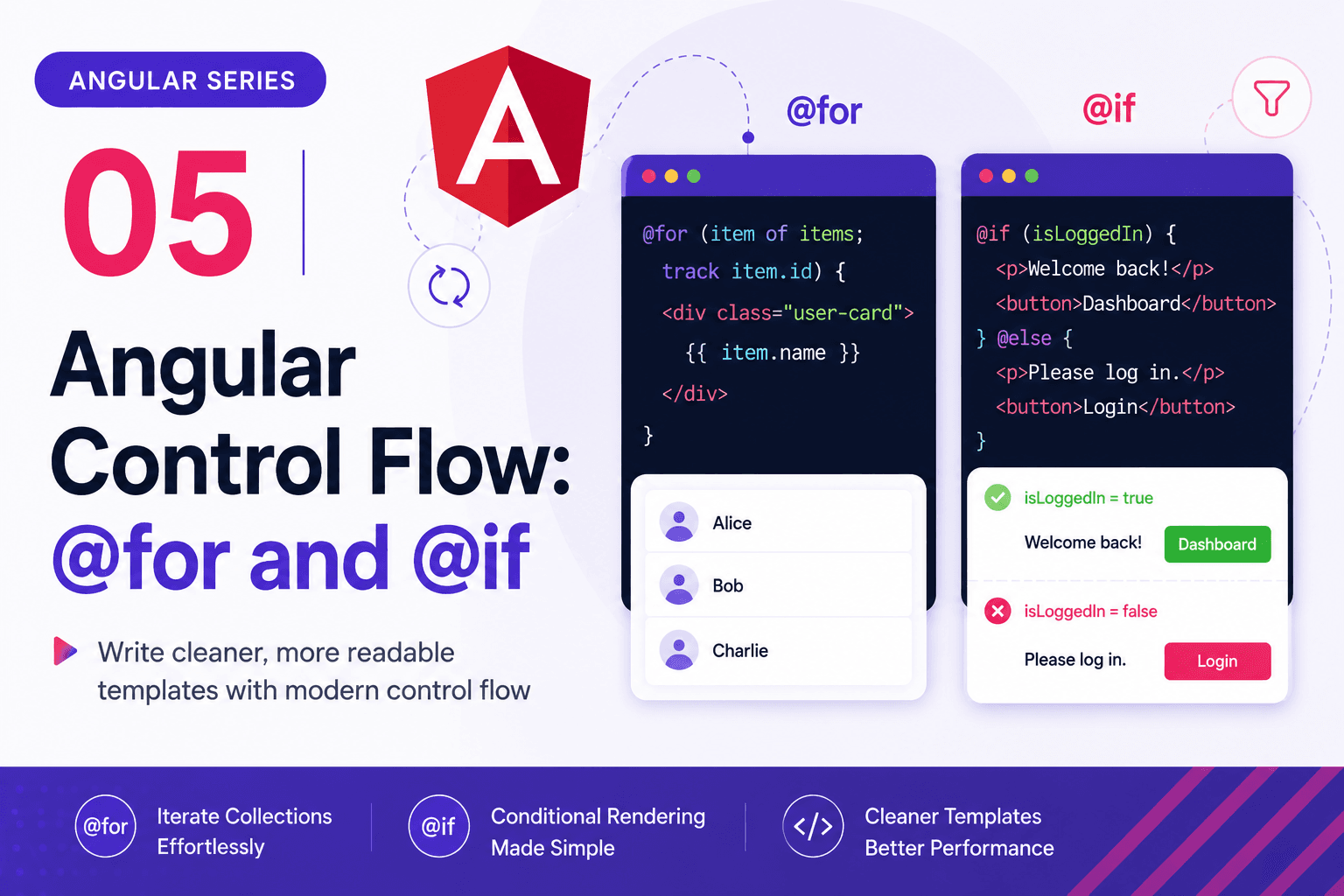
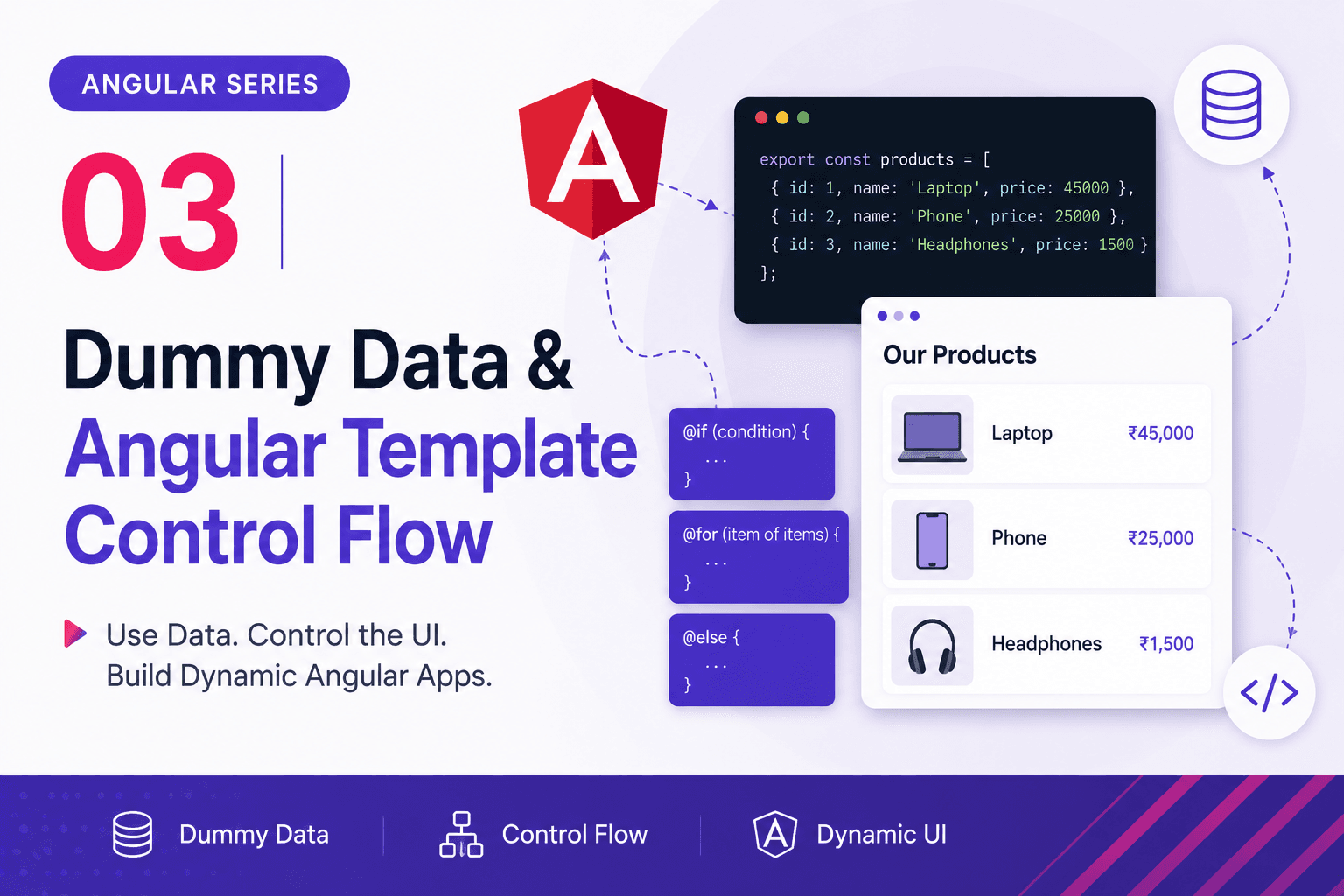
In our last post, we successfully connected a mock JSON dataset to our Angular component and displayed our tasks using Angular's @for and @if control flow. But right now, our Task Manager is completely static.
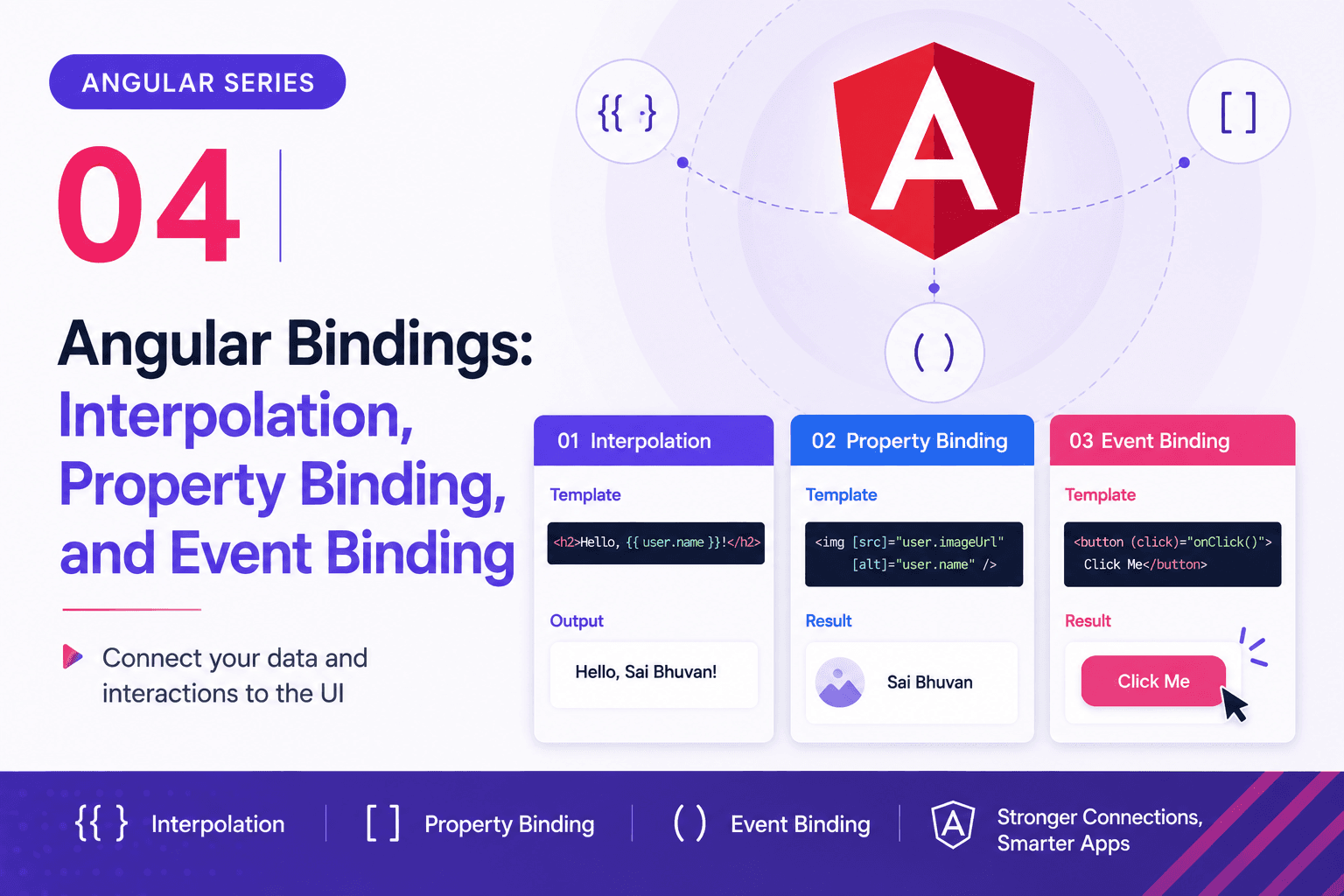
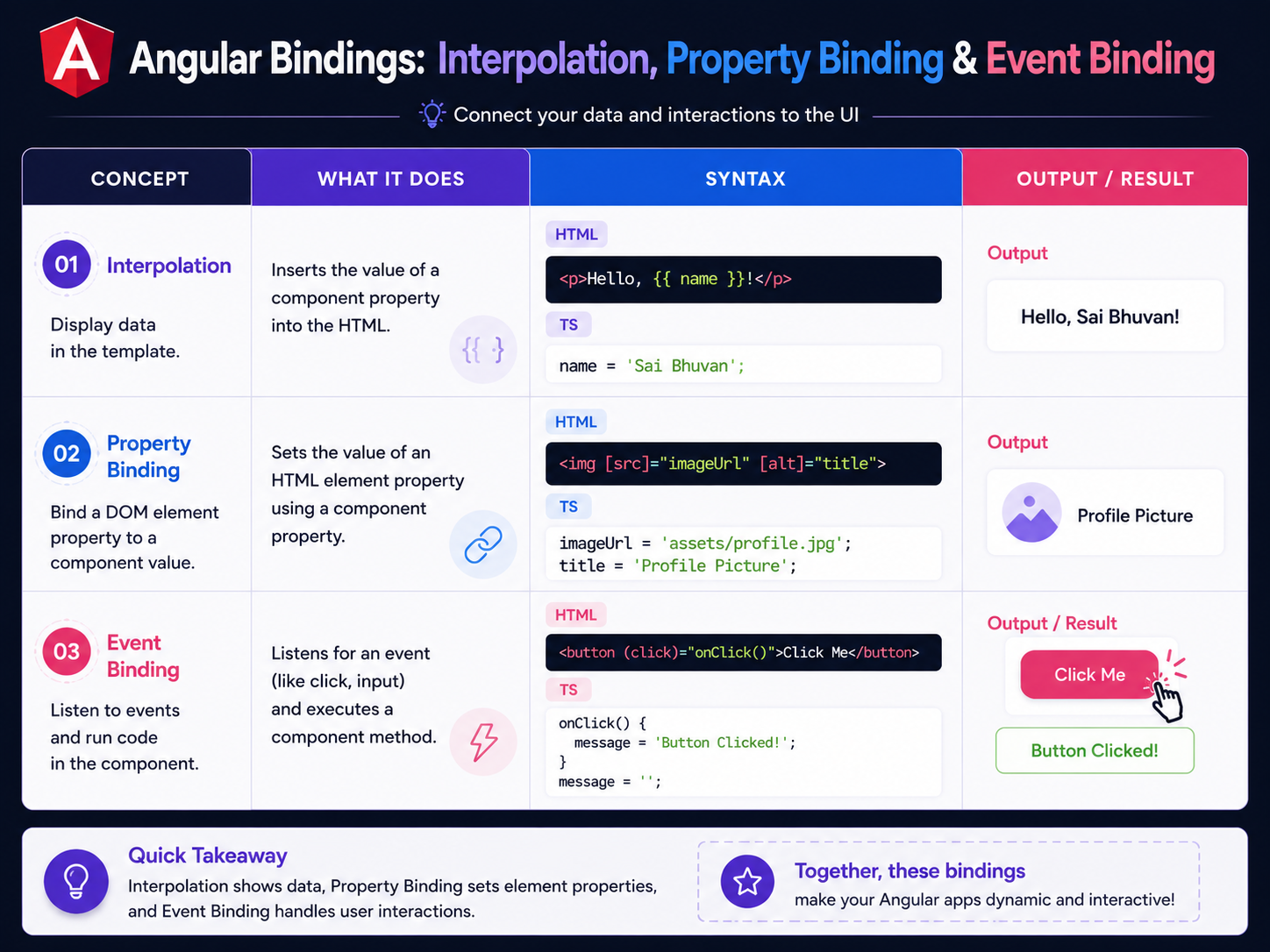
This post explains the three foundational Angular template concepts you need to bring your application to life: Interpolation, Property Binding, and Event Binding.
We will use our current Task component as the main example, so the syntax feels directly connected to the real code we have been writing.
1. The Big Idea
Angular templates are not just plain HTML. They are HTML supercharged with Angular binding syntax.
Bindings are simply how Angular connects:
- Data and methods from your TypeScript file (
task.ts). - To the visual UI in your HTML file (
task.html).
Think of it like this: your TypeScript class holds the data and logic, your HTML defines the layout, and the Angular binding syntax is the bridge that connects the two.
2. The Data Flow of Bindings
This colourful flowchart visualizes how your TypeScript methods and properties map directly to the HTML template through the three different types of bindings.